How to Break a Weight Loss Plateau: Why Weight Stalls and 5 Things to Check

Was your weight dropping nicely until one day it simply stopped? When you eat the same and fast the same but the number won't move, it's easy to blame your willpower. Yet plateaus are a common part of losing weight.
Let's look at why they happen and what to check first.
1. Is it really a plateau?
Body weight can swing by about 1–2 kg (2–4 lb) within a day. Salty food, carbohydrate intake, your menstrual cycle, bowel movements and intense exercise all play a part.
So a few days without change isn't necessarily a plateau. Suspect one when both your weekly average weight and your waist measurement stay the same for 3–4 weeks.
| Situation | What to do |
|---|---|
| Weight unchanged for a few days | Keep doing what you're doing |
| Same weight, smaller waist | Your body is changing, so keep going |
| Same weight and waist for 3–4 weeks | Go through the 5 checks below |
Weigh-ins are only comparable under the same conditions. Try weighing yourself in the morning, after using the bathroom and before eating.
2. Three reasons your weight stalls
Much of the early loss was water
Early on, your body sheds stored glycogen along with water. Each gram of glycogen holds about 3 g of water, so the number falls quickly. It's natural for the pace to slow after this phase.
A lighter body uses less energy
As you lose weight, you need less energy both at rest and when moving. The amount of food that once led to weight loss may now be just enough to maintain it.
Studies have also reported "metabolic adaptation," in which the body saves more energy than the weight loss alone would predict. However, it varies widely between people, and in well-designed studies the effect was small or not significant. Don't worry: your body isn't broken.
You may be eating more and moving less without noticing
Over time, extra bites, drinks and sauces creep up. And as fatigue builds, everyday movement such as walking tends to drop.
3. Five things to check during a plateau
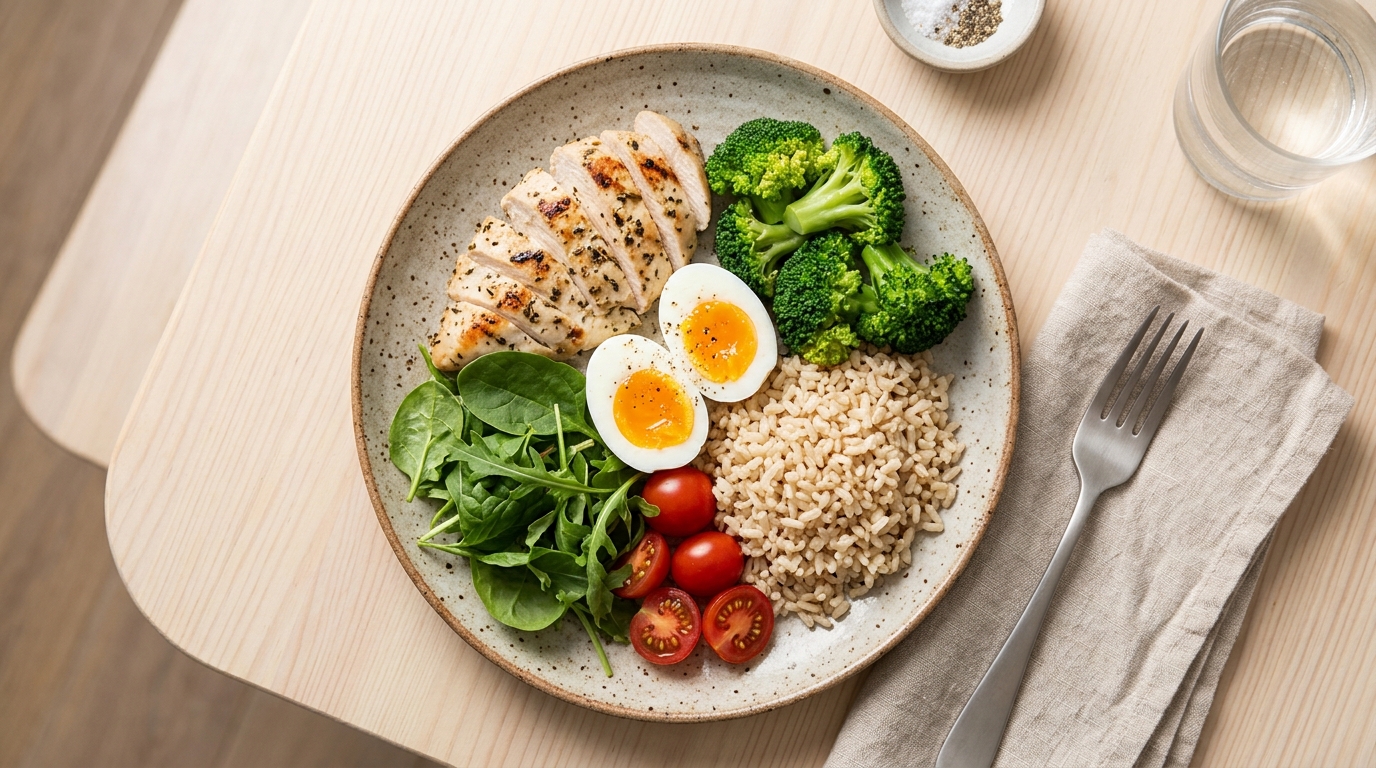
- Log honestly for 3 days: Write down everything, including drinks, snacks and sauces. You'll see where you can cut back.
- Put protein first: While losing weight, about 1.2–1.6 g per kg of body weight a day is often recommended. If you have kidney disease, talk to your doctor first.
- Add strength training twice a week: It helps limit muscle loss while you lose weight.
- Walk more each day: Try adding just 1,000–2,000 steps. A 10-minute walk after meals works too.
- Get enough sleep: Too little sleep can increase your appetite. Aim for at least 7 hours a night.

4. Should you fast for longer?
It's often the first idea that comes to mind, but it may not be the answer. If longer fasts lead you to eat more in your eating window, the result won't change.
- If 16:8 feels comfortable: Keep your schedule and look at the quality of your meals first.
- If late dinners and night snacks are common: Move your last meal 1–2 hours earlier.
- If fasting is hard and leads to binge eating: Cutting back to 14:10 or 12:12 is the better choice.
5. What to avoid during a plateau
- Cutting meals drastically: This can lead to muscle loss and binge eating.
- Suddenly doubling your workouts: Fatigue and injuries can make you stop.
- Weighing yourself many times a day: Natural changes will only unsettle you.
If you are pregnant or breastfeeding, take diabetes medication, or have ever had an eating disorder, talk to a healthcare professional before changing how you eat or fast. Also see a doctor if you gain weight for no clear reason or have ongoing fatigue or swelling.
Wrapping up
A plateau isn't failure. It's a sign to adjust your approach to the body you have now. Don't change all 5 things at once. Pick just one this week and stick with it for 2 weeks.
Log your fasting hours, meals, weight and progress photos together in InterFasting, and you'll notice changes the scale alone can't show.

InterFasting - Intermittent Fasting Tracker & Timer
Get more contents about fasting in Our App
All you want for Diet
Fasting Timer, Fasting Tracker, Body Tracker